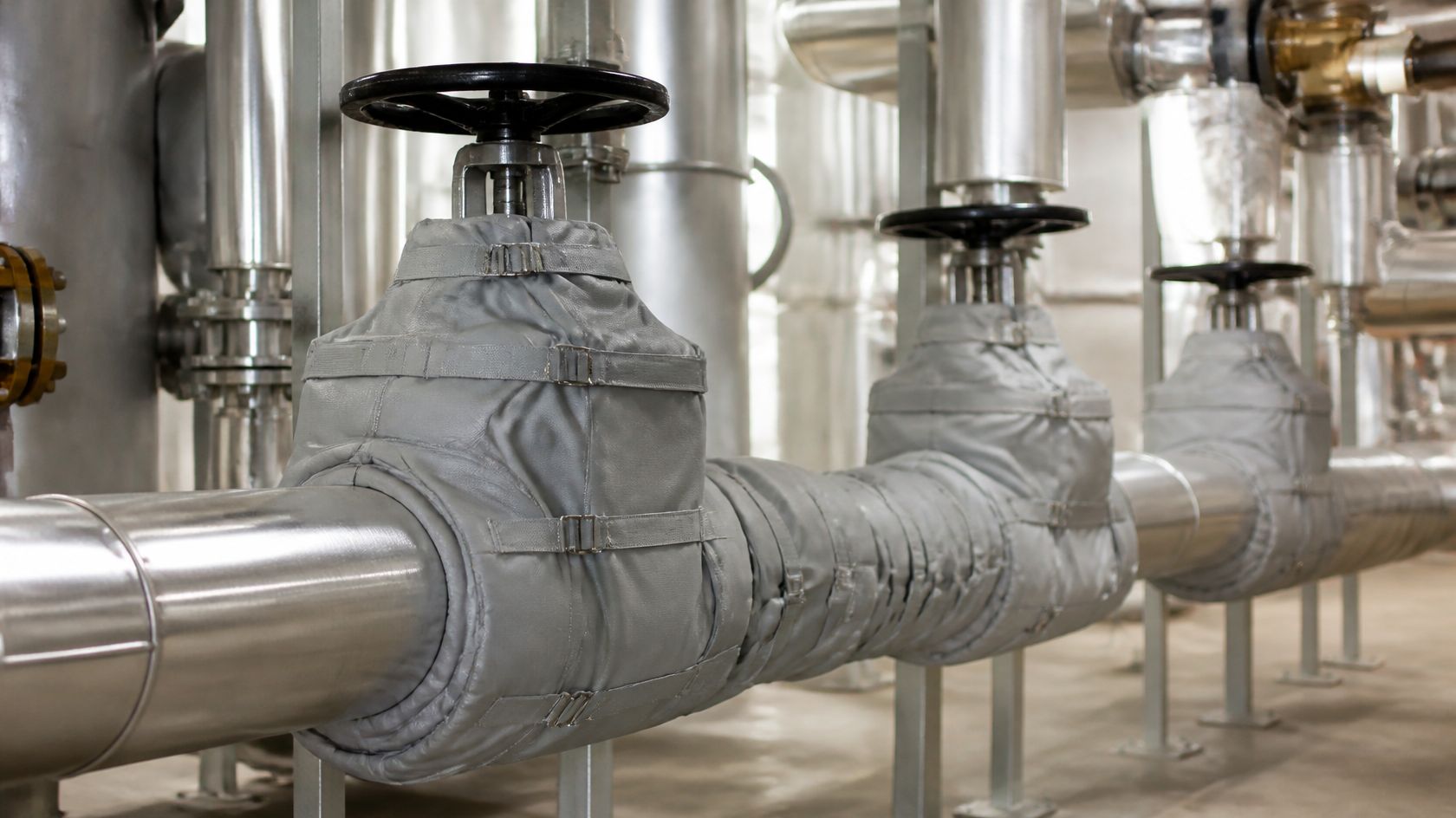
Walk around almost any plant room or process site and you’ll see the same thing. The straight runs of pipe are neatly insulated, but the valves, flanges, strainers and pumps are left bare. It’s usually because those parts need regular access for maintenance, and nobody wants to cut out and replace fixed insulation every time a valve is serviced.
The problem is that those bare fittings are some of the hottest, biggest surfaces on the whole system. They waste energy all day, every day, and they can burn anyone who brushes against them. Removable insulation jackets solve this. In this guide we explain what they are, where they make the biggest difference, how they’re made, and how to tell whether your site needs them.
What are removable insulation jackets?
Removable insulation jackets, sometimes called insulation covers, valve jackets or flexible lagging, are made-to-measure insulated covers that wrap around equipment and fasten in place. Instead of being fixed permanently like standard pipe lagging, they’re held on with straps, buckles, ties or hook-and-loop fastenings, so they can be taken off in minutes and put back on once the work is done.
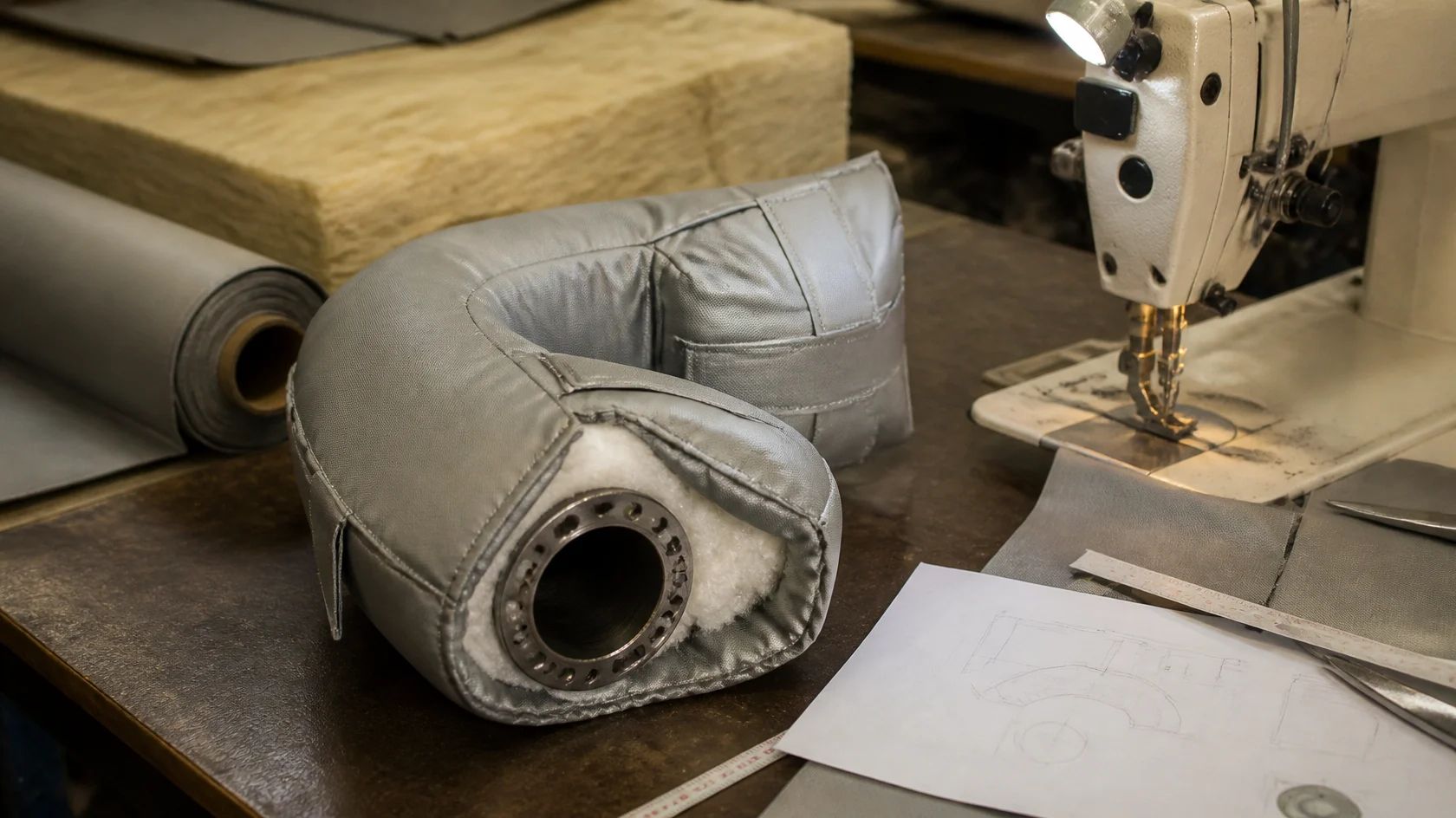
Each jacket is built around an insulation core, with tough, heat-resistant cloth on the inner and outer faces. Because they’re made to fit a specific item, they cover awkward shapes that are hard to insulate any other way.
Where they’re used
- Valves of all types, including gate, globe, ball and control valves
- Flanges and flanged joints
- Strainers and filters
- Pumps and pump casings
- Steam traps
- Heat exchanger end caps and expansion joints
- Turbine casings, exhausts and loading arms
Why bare valves and flanges cost you money
It’s easy to assume a single valve can’t make much difference. But a valve has a lot more surface area than the pipe it sits in. The US Department of Energy points out that a 6-inch gate valve can have more than 6 square feet of surface radiating heat. Multiply that across every valve, flange and strainer on a site and the losses add up fast.
Spirax Sarco, one of the best-known names in steam systems, estimates that an uninsulated steam trap loses roughly as much heat as a one-metre length of bare 1-inch pipe. It also says insulation jackets can cut that loss by up to a factor of 12, and that most sites recover the cost within six to 18 months.
On steam and hot water systems, that wasted heat is energy your boiler has to make up for. On process lines, it can also make temperatures harder to control. And on chilled or cold lines, bare fittings let condensation form, which leads to drips, corrosion and damage to nearby equipment.
The other benefits: safety, maintenance and compliance
Protecting people from hot surfaces
A bare steam valve can easily be hot enough to cause a serious burn. Under the Management of Health and Safety at Work Regulations, employers must assess and control risks like this. A well-fitted jacket brings the surface temperature down to a much safer level and is often the simplest way to deal with a hot surface that can’t be guarded or moved.
Faster maintenance and less waste
With fixed insulation, every valve repair means cutting the lagging off and paying someone to replace it afterwards. Often it never gets replaced at all. A removable jacket comes off in minutes, goes back on just as quickly, and can be reused again and again for years.
Better results from energy audits
If your site is working towards energy-saving targets or carbon reporting, bare fittings are usually one of the quickest wins. A thermal insulation audit, such as a TIPCheck, will often flag valves and flanges as some of the biggest sources of avoidable heat loss on site.
How removable insulation jackets are made
Off-the-shelf covers exist, but they rarely fit properly on industrial equipment. A loose jacket leaves gaps, lets heat escape and can slip out of place. That’s why most industrial jackets are made to measure. The process usually looks like this:
- Site survey: each item is measured on site and recorded on a cut list, including bends, branches, bolts and any fixings that need cut-outs.
- Material selection: the cloth and insulation are chosen to suit the operating temperature, the environment and whether the jacket will be indoors or outside.
- Manufacture: each jacket is cut and stitched in the workshop, using high-temperature thread and fastenings that can cope with the heat.
- Labelling: every jacket is labelled with its reference so it goes back on the right item every time.
- Fitting: jackets are fitted on site and checked for a snug fit with no gaps.
Common materials
For most hot applications, jackets use silicone-coated glass cloth on the faces, which is durable, water-resistant and copes well with high temperatures. The core is usually glass fibre or mineral wool insulation, with the thickness chosen to suit the temperature and the level of heat loss you’re aiming for. For very high temperatures, specialist cloths and cores are used. Stitching is normally done with aramid or stainless-steel-reinforced thread, as standard thread would break down in the heat.
Removable jackets or fixed insulation?
Fixed insulation is still the right choice for long, straight runs of pipe that rarely need to be touched. Removable jackets earn their place wherever you need access. As a simple rule:
- Choose fixed insulation for straight pipe runs, vessels and areas that are rarely opened.
- Choose removable jackets for valves, flanges, pumps, strainers and anything inspected or serviced regularly.
- Choose removable jackets for awkward shapes that are hard to clad neatly, such as bends with branches, loading arms and turbine casings.
On most sites, the best result is a mix of both, with fixed insulation on the pipework and removable jackets on the fittings.
Signs your site needs insulation jackets
- You can see bare valves, flanges or strainers on hot or cold lines
- Old lagging has been cut away for maintenance and never replaced
- Staff have to work close to hot surfaces
- There is condensation or ice forming on cold fittings
- Plant rooms feel noticeably hotter than they should
- Your energy bills are rising without any obvious reason
If any of these sound familiar, a short site survey is the best place to start. It will show which items are worth insulating first and give you a clear idea of cost before you commit.
How AIC can help
At AIC we survey, design, supply and fit made-to-measure removable insulation jackets for industrial and commercial sites across the UK. We measure every item on site, build each jacket to suit its temperature and environment, and label everything so it’s quick to refit after maintenance. Alongside our flexible insulation covers, we also provide thermal insulation, trace heating and TIPCheck energy audits, so we can look at your whole system, not just the fittings.
Frequently asked questions
How long do removable insulation jackets last?
A well-made jacket used within its temperature range will usually last many years. Because it can be removed and refitted without damage, it outlasts fixed insulation on items that are opened regularly.
Can insulation jackets be used outdoors?
Yes. Jackets for outdoor use are made with weather-resistant outer cloth and fitted so that rainwater runs off rather than soaking into the insulation.
How quickly do insulation jackets pay for themselves?
It depends on the operating temperature, how many hours the system runs and your energy costs. On steam and hot water systems, many sites see payback within one to two years, and often sooner.
Do you need to shut the plant down to fit them?
Usually not. Measuring and fitting can often be done while the system is running, as long as it’s safe to work near the equipment. We’ll agree the safest approach with you before any work starts.
Talk to AIC about your site
Want to know how much energy your bare valves and flanges are wasting? Contact AIC today to arrange a site survey and a free, no-obligation quote for made-to-measure insulation jackets.
Find out more about our flexible insulation covers, thermal insulation and TIPCheck energy audits, or read our guide: Pipe Insulation Survey UK.
Contact AIC for a free, no-obligation quote or call 01642 689587.