Most people think of insulation as a way to save energy. On many sites, it does another job that’s just as important: it stops people getting burnt.
Steam lines, condensate returns, boiler pipework, valves and exhausts can run hot enough to cause a serious burn in a second or two. If someone can touch them, by accident or while working nearby, the risk needs controlling. That’s what personnel protection insulation is for.
What is personnel protection insulation?
Personnel protection insulation (sometimes called burn protection or touch protection) is insulation whose main job is to keep the outer surface of hot equipment at a temperature that won’t burn someone who touches it.
You’ll usually find it:
- Along walkways, ladders, platforms and access routes
- Around valves, flanges and pumps that operators work on
- On hot pipework at head, hand or knee height
- In plant rooms and boiler houses where space is tight
How hot is too hot?
Whether a surface burns depends on two things: how hot it is and how long you touch it. For example, a short, accidental touch on very hot metal can burn instantly, while a lower temperature can still burn if contact lasts longer.
The material matters too. Bare metal, for instance, transfers heat to skin much faster than painted, plastic or other non-metallic surfaces, so a metal surface burns at a lower temperature.
The main standards used in the UK are:
- BS EN ISO 13732-1, which sets out burn thresholds for hot surfaces based on material and contact time
- BS 5422, the British Standard for insulation thickness, which includes tables for personnel protection. These tables aim to keep the outer surface at about 50°C for a metal finish (such as bright aluminium cladding) or 59°C for a non-metallic finish
However, your site may have its own, tighter limit, especially in areas used by visitors or where people work close to hot equipment for long periods. Always check your site specification.
Why cladding choice changes the answer
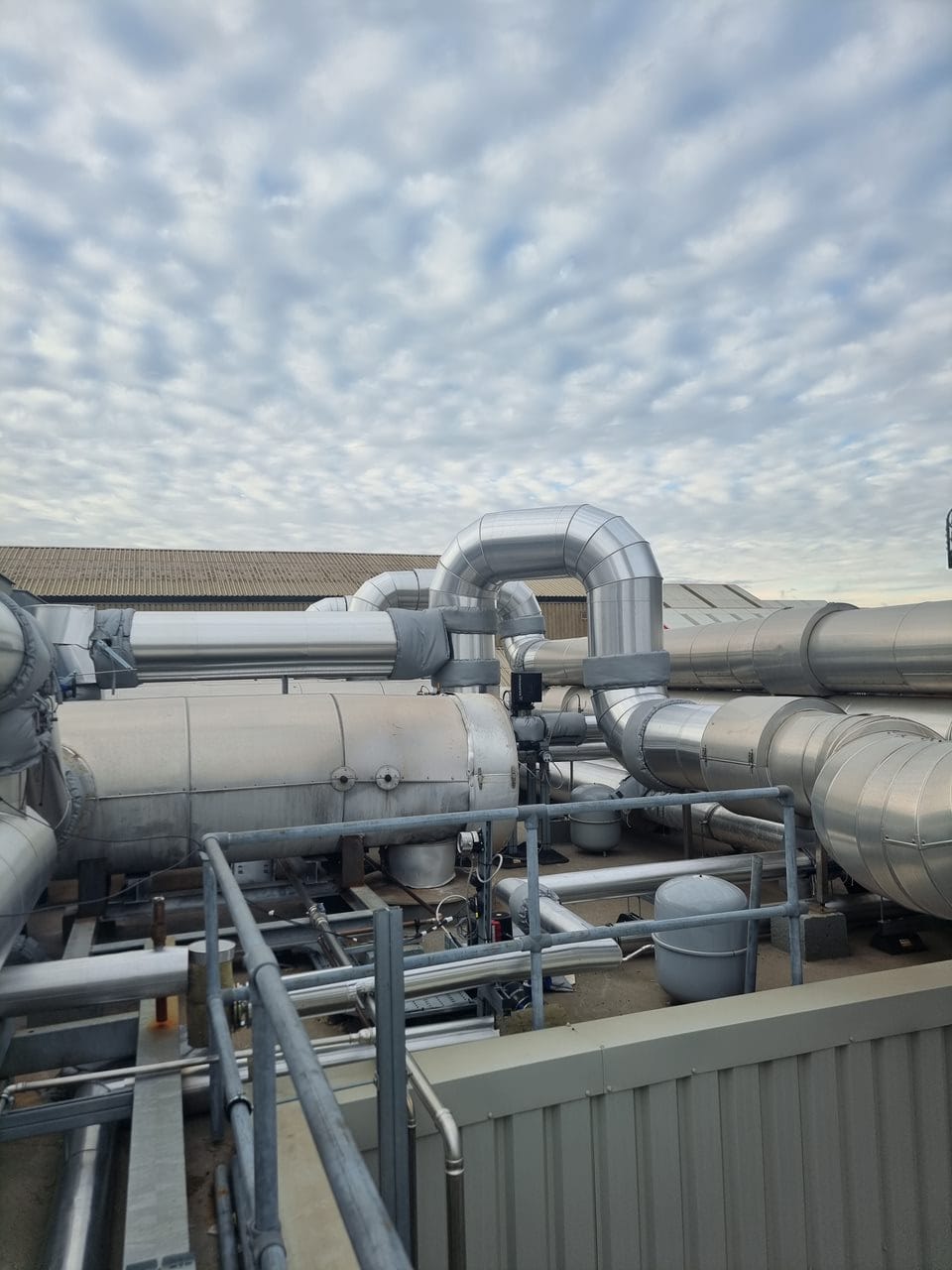
Here’s a detail many people miss. Shiny metal cladding, like bright aluminium, gives off heat less readily than a dull or painted surface. As a result, the outside of the cladding can run hotter than you’d expect.
That’s why BS 5422 uses different tables for metal and non-metallic finishes. So if you change the cladding, you may need to change the insulation thickness to keep the surface safe.
Insulate to a safe surface temperature
Personnel protection is a design job, not a guess. A good insulation contractor will:
- Measure or confirm the operating temperature of each line
- Agree the target surface temperature for the area
- Choose the insulation material and cladding
- Work out the thickness needed to hit the target
- Check surface temperatures once the system is running
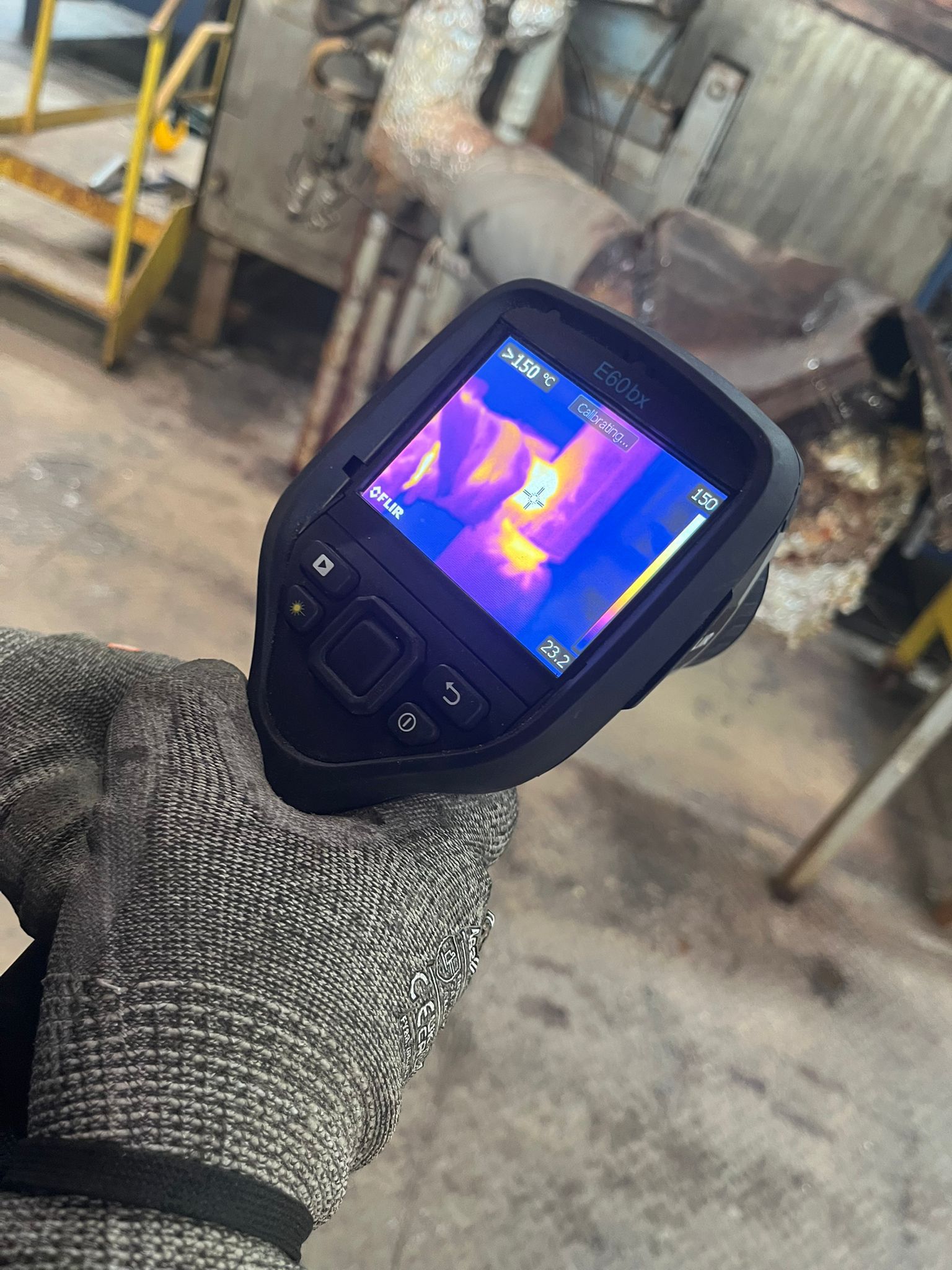
A thermal imaging camera is a quick way to spot hot spots, gaps and damaged sections after installation, or on older insulation that someone has knocked or left off.
Don’t forget valves and flanges
Maintenance teams often leave valves, flanges and fittings bare, because they’re awkward to insulate. However, they’re also exactly the places operators put their hands.
Removable insulation jackets solve this. We make each jacket to fit, so it protects people from burns and cuts heat loss. Better still, your team can take it off and refit it in minutes when the valve needs work.
Guards vs insulation
Sometimes sites use a mesh guard or cage instead of insulation, for example where the heat needs to escape. Guards stop contact but don’t save energy. On the other hand, where you don’t need the heat, insulation usually does both jobs at once: it protects people and cuts your fuel bill.
What the law expects
Under UK health and safety law, employers must assess the risks in their workplace and take reasonable steps to control them. Hot surfaces that people can touch are a known risk, so include them in your risk assessment. Insulating them is one of the most effective ways to remove the hazard at source.
Quick site check
Walk your site and look for:
- Bare or damaged insulation on hot lines within reach
- Valves and flanges left uninsulated after maintenance
- Dented or missing cladding, or cladding nobody refitted
- Hot equipment near walkways, ladders or work areas
- Warning signs instead of a proper fix
Need help making hot surfaces safe?
AIC surveys, designs and installs personnel protection insulation and removable jackets for sites across Teesside and the North East. See our thermal insulation services and flexible insulation covers, or call 01642 689587 or email sales@aic-industrial.co.uk.
Related reading: Pipe insulation survey UK: what to expect · What is a TIPCheck?