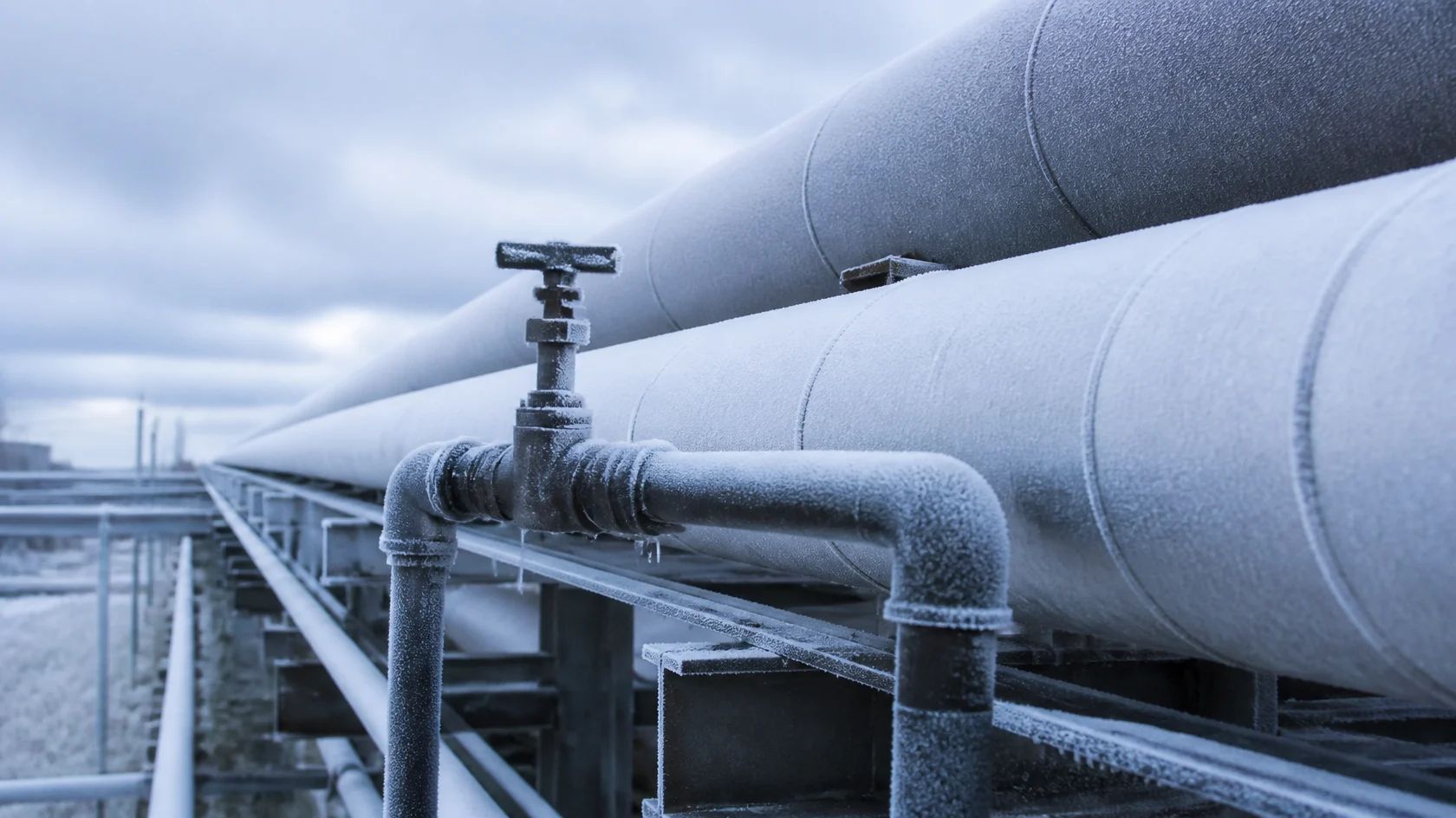
Every winter, the same calls come in. A cold snap hits overnight, a water main or process line freezes, and by morning there’s a split pipe, a flooded plant room or a production line that won’t start. For many sites, the cost of the downtime is far higher than the cost of the repair.
The good news is that frozen pipes are almost always preventable. With the right mix of insulation and trace heating, and a few simple checks before the weather turns, you can keep your site running all winter. Here’s what you need to know.
Why industrial pipes freeze
Water expands by around 9% when it turns to ice. Inside a pipe, that expansion builds up huge pressure, enough to split copper, crack plastic and damage valves, pumps and meters. The damage often isn’t found until the ice thaws and water starts pouring out.
Some pipework is far more at risk than the rest:
- Pipes running outside or on external pipe racks
- Pipework in unheated buildings, roof spaces, loading bays and warehouses
- Lines that sit still for long periods, such as fire mains, standby lines and dead legs
- Small-bore pipes, instrument lines and drains, which freeze much faster than large pipes
- Valves, flanges and pumps left uninsulated
- Insulation that is damaged, wet or missing
Insulation alone isn’t always enough
This is the part many people don’t realise. Insulation slows down heat loss, but it can’t stop it. If water sits still in a pipe and the temperature stays below freezing for long enough, it will eventually freeze, however well the pipe is insulated.
BS 5422, the British Standard for thermal insulation, covers insulation thickness for frost protection. Its tables are based on giving the pipe enough time to get through a cold period, typically overnight, before ice forms. That works well where water flows regularly or the cold spell is short. For pipes that sit still, or for long periods of freezing weather, insulation needs to be paired with a heat source.
How trace heating protects pipework
Trace heating, also called heat tracing, is an electric heating cable that runs along the length of a pipe, underneath the insulation. It replaces the heat the pipe loses to the cold air and keeps the contents above freezing, no matter how long the cold weather lasts.
Self-regulating cable
Most frost protection systems today use self-regulating cable. As the pipe gets colder, the cable automatically gives out more heat, and as it warms up, the output drops. This makes it energy efficient and much less likely to overheat.
Controls and monitoring
A good trace heating system is controlled by a thermostat, so it only switches on when it’s needed, usually when the air temperature drops to around 3 to 5°C. On larger sites, controllers can monitor each circuit and raise an alarm if something fails, which is far better than finding out from a burst pipe.
Why insulation and trace heating work best together
Trace heating and insulation are a team. Without insulation, a trace heating cable would have to work far harder and use far more power. With the right insulation over the top, the cable only has to replace a small amount of lost heat. That’s why getting the insulation right, including on the valves and flanges, makes trace heating cheaper to run.
Your pre-winter checklist
Whether or not you already have trace heating, it’s worth walking the site before the first frost. Here’s what to look for:
- Check outdoor and exposed insulation for damage, gaps and missing sections
- Look for wet or crushed insulation, which loses most of its performance
- Make sure cladding and weatherproofing are intact, with joints sealed
- Check that valves, flanges and pumps are covered, not left bare
- Test trace heating circuits and thermostats before you need them
- Check control panels for faults, tripped breakers or alarms
- Identify dead legs and lines that sit still, and decide how they’ll be protected
- Make sure staff know who to call if something fails out of hours
If you find problems, it’s far better to fix them in October than in the middle of a January freeze, when every contractor in the country is busy.
Don’t forget the fittings
Valves and flanges are often the first places to freeze. They have more metal and more surface area than the pipe, and they’re the most likely to have been left bare after maintenance. Removable insulation jackets are a simple fix. They keep the fittings protected but can be taken off in minutes when the valve needs work, then put straight back on.
How AIC can help
At AIC we design, install and maintain trace heating systems and thermal insulation for industrial and commercial sites across the UK. We can survey your pipework, identify the lines most at risk, repair or replace damaged insulation and fit trace heating where insulation alone isn’t enough. We also make removable insulation jackets for valves and flanges, so your whole system is protected, not just the straight runs.
Frequently asked questions
At what temperature do pipes freeze?
Water freezes at 0°C, but pipes don’t freeze the moment the air hits zero. How quickly they freeze depends on pipe size, insulation, wind and whether the water is moving. Small, exposed pipes with still water are at risk first.
Does pipe insulation stop pipes freezing?
Insulation slows freezing down, but it doesn’t stop it. If water sits still in sub-zero temperatures for long enough, it will freeze. For lines like this, trace heating under the insulation is the reliable answer.
Is trace heating expensive to run?
Not usually. Self-regulating cable with thermostatic control only uses power when it’s cold, and only as much as it needs. Good insulation over the cable keeps running costs low.
When should we check our frost protection?
Ideally in early autumn, before the first frost. That gives you time to fix damaged insulation or faulty heating circuits before the cold weather arrives.
Talk to AIC about your site
Don’t wait for the first freeze. Contact AIC today to book a pre-winter survey of your pipework, insulation and trace heating, and get a free, no-obligation quote.
Find out more about our trace heating, thermal insulation and flexible insulation covers, or read our guide: What Is Pipe Lagging.
Contact AIC for a free, no-obligation quote or call 01642 689587.