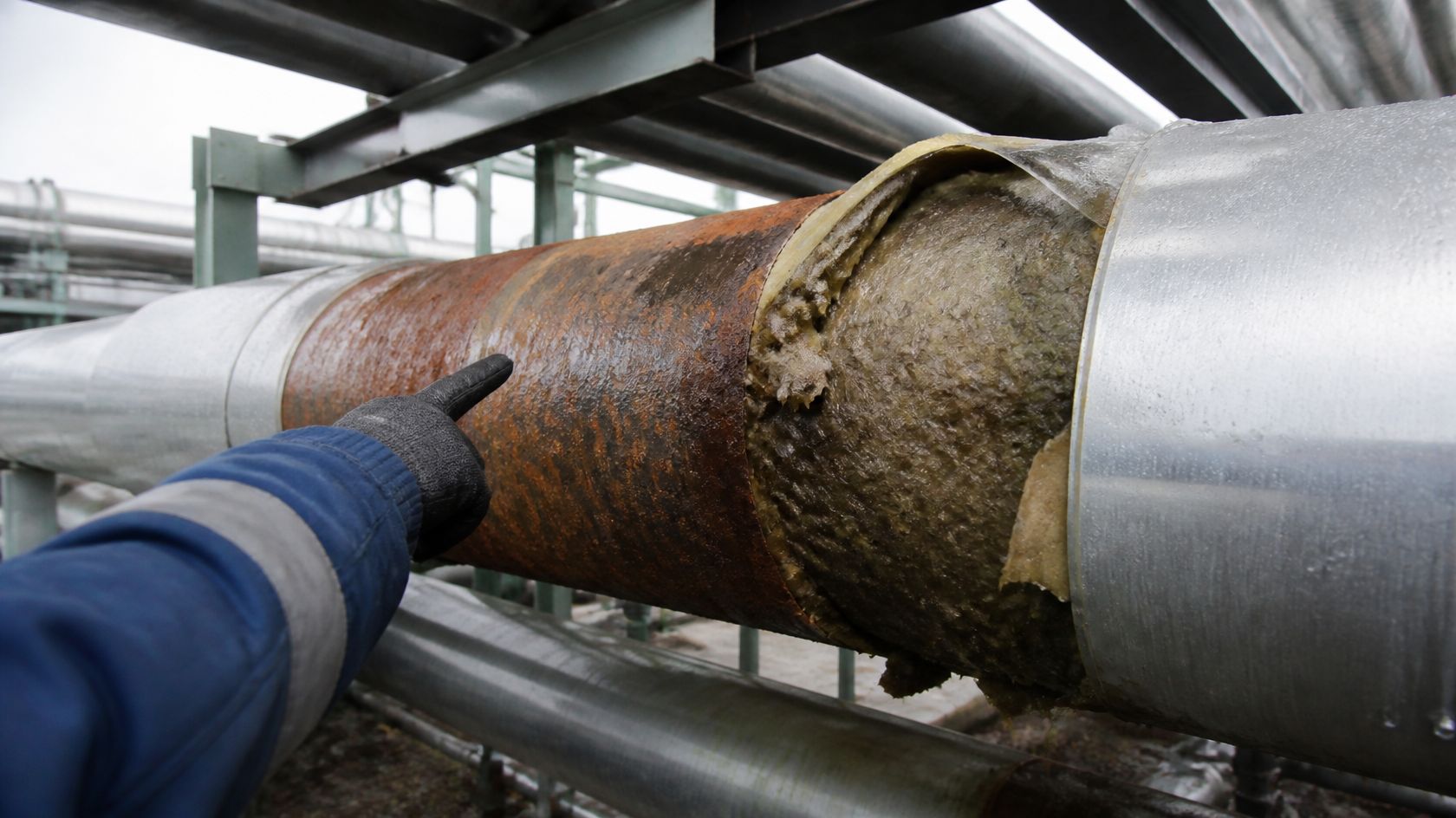
Insulation is meant to protect your pipework. But when it’s damaged, badly fitted or left wet, it can do the opposite. Water gets in, gets trapped against the steel and starts eating away at the pipe, completely out of sight. By the time anyone notices, it’s often a leak, a failed inspection or an unplanned shutdown.
This is corrosion under insulation, usually shortened to CUI. It’s one of the most common and expensive problems on process plants, refineries, chemical sites and power stations. The good news is that most of it can be prevented. Here’s what you need to know.
What is corrosion under insulation?
Corrosion under insulation is external corrosion of pipes, vessels and equipment that happens underneath the insulation and cladding. It isn’t caused by the insulation itself. It’s caused by water that gets into the insulation and stays there, held against the metal surface.
Because the steel is hidden, CUI can carry on for years without being seen. Insulation is often only removed every 15 to 20 years, and inspection ports show less than 1% of the surface. That’s why CUI is so often found by accident, when a pipe starts leaking or insulation is stripped for another reason.
What causes CUI?
CUI needs two things: water and a metal surface at the right temperature. The water can come from many places:
- Rain getting in through damaged cladding, open joints or missing sealant
- Washdown water, steam leaks and cooling tower drift
- Condensation, especially on lines that cycle between hot and cold
- Water trapped during installation, when insulation was fitted wet or in poor weather
Once inside, wet insulation acts like a sponge. Chlorides and other salts can leach out of some insulation materials and the surrounding atmosphere, making the water even more corrosive.
The temperature danger zone
For carbon steel, CUI is most likely where the surface runs at roughly -4°C to 175°C. In that range there’s enough heat to speed up corrosion, but not enough to drive the water off. Lines that cycle in and out of this range, or that run intermittently, are especially at risk.
Stainless steel isn’t immune either. Between around 50°C and 175°C, chlorides in wet insulation can cause external stress corrosion cracking, which can lead to sudden failures.
Where to look first
CUI tends to start in the same places on most sites. If you’re planning an inspection, these are the areas to check first:
- Low points and the bottom of vertical runs, where water collects
- Around pipe supports, clamps and brackets that break through the cladding
- Valves, flanges and fittings, where cladding is complex and often poorly sealed
- Insulation terminations, nozzles and branch connections
- Areas near steam vents, safety showers and cooling towers
- Any cladding that is dented, split, loose or missing sealant
How to prevent corrosion under insulation
There’s no single fix for CUI. The best results come from getting several things right at once.
1. Protect the steel with the right coating
The most effective defence is a protective coating on the steel before it’s insulated. Industry guidance for CUI, including NACE SP0198, recommends coatings chosen for the operating temperature and any thermal cycling. That means proper surface preparation, usually abrasive blasting, followed by a coating system rated for the job.
2. Choose the right insulation
Insulation should suit the temperature, the environment and the risk of water getting in. Low-chloride materials are important on stainless steel, and some materials shed water far better than others.
3. Keep the water out
Good cladding and weatherproofing matter as much as the insulation. Joints should overlap so water runs off, seams should be sealed, and penetrations for supports and fittings should be properly finished. Small details like this make a big difference.
4. Inspect and maintain regularly
Regular visual checks of the cladding, backed up by targeted inspection and non-destructive testing (NDT) at high-risk points, help you catch problems early. Damaged cladding should be repaired quickly, before water has a chance to soak in.
What to do if you find CUI
If you suspect CUI, the affected insulation needs to come off so the steel can be inspected and the extent of the damage assessed. Depending on what’s found, the pipe may need repair or replacement. The surface is then blasted and recoated, and new insulation and cladding fitted to the right standard. It’s far cheaper to do this as planned work than after a leak.
How AIC can help
Because we offer insulation, blasting and painting, and NDT inspection under one roof, AIC can deal with CUI from start to finish. We can strip and inspect suspect areas, prepare and recoat the steel, and reinsulate and clad it so water stays out. We work across process, petrochemical, power and manufacturing sites throughout the UK.
Frequently asked questions
Can you see corrosion under insulation from the outside?
Not usually. You may see warning signs such as damaged cladding, rust staining, wet insulation or bulging, but the corrosion itself is hidden. Inspection and NDT are needed to confirm it.
Which pipes are most at risk of CUI?
Carbon steel lines running between about -4°C and 175°C, lines that cycle between hot and cold, and anything with damaged cladding or poor sealing around supports and fittings.
Does insulation cause corrosion?
No. Insulation causes problems only when water gets into it and stays against the metal. Correctly specified, installed and maintained insulation does not cause CUI.
How often should insulated pipework be inspected for CUI?
It depends on the risk. High-risk areas should be checked regularly, with a visual check of the cladding at least once a year and more detailed inspection based on a risk assessment.
Talk to AIC about your site
Worried about what’s happening under your insulation? Contact AIC to arrange an inspection and a free, no-obligation quote for repairs, coatings and reinsulation.
Find out more about our thermal insulation, blasting and painting and NDT inspection services, or read our guide: Pipe Insulation Survey UK.
Contact AIC for a free, no-obligation quote or call 01642 689587.