Steel doesn’t burn, but it does lose strength quickly in a fire. As the temperature climbs, structural steel can weaken to the point where beams sag and columns buckle. Passive fire protection is there to slow that process down, giving people time to get out safely and firefighters time to do their job.
One of the most widely used forms of passive fire protection on steel is intumescent coating. In this guide we explain how it works, what the fire ratings mean and what to look for when you’re planning a project.
What is passive fire protection?
Passive fire protection (PFP) is built into a structure and works without needing to be switched on. Unlike sprinklers or alarms, it doesn’t rely on power, water or a person to activate it. It simply does its job when a fire starts.
PFP includes fire-resisting walls and doors, fire stopping around service penetrations, boards and sprays, and protective coatings on structural steel. Together, they help contain a fire and keep the building standing for long enough to evacuate it safely.
How intumescent coatings work
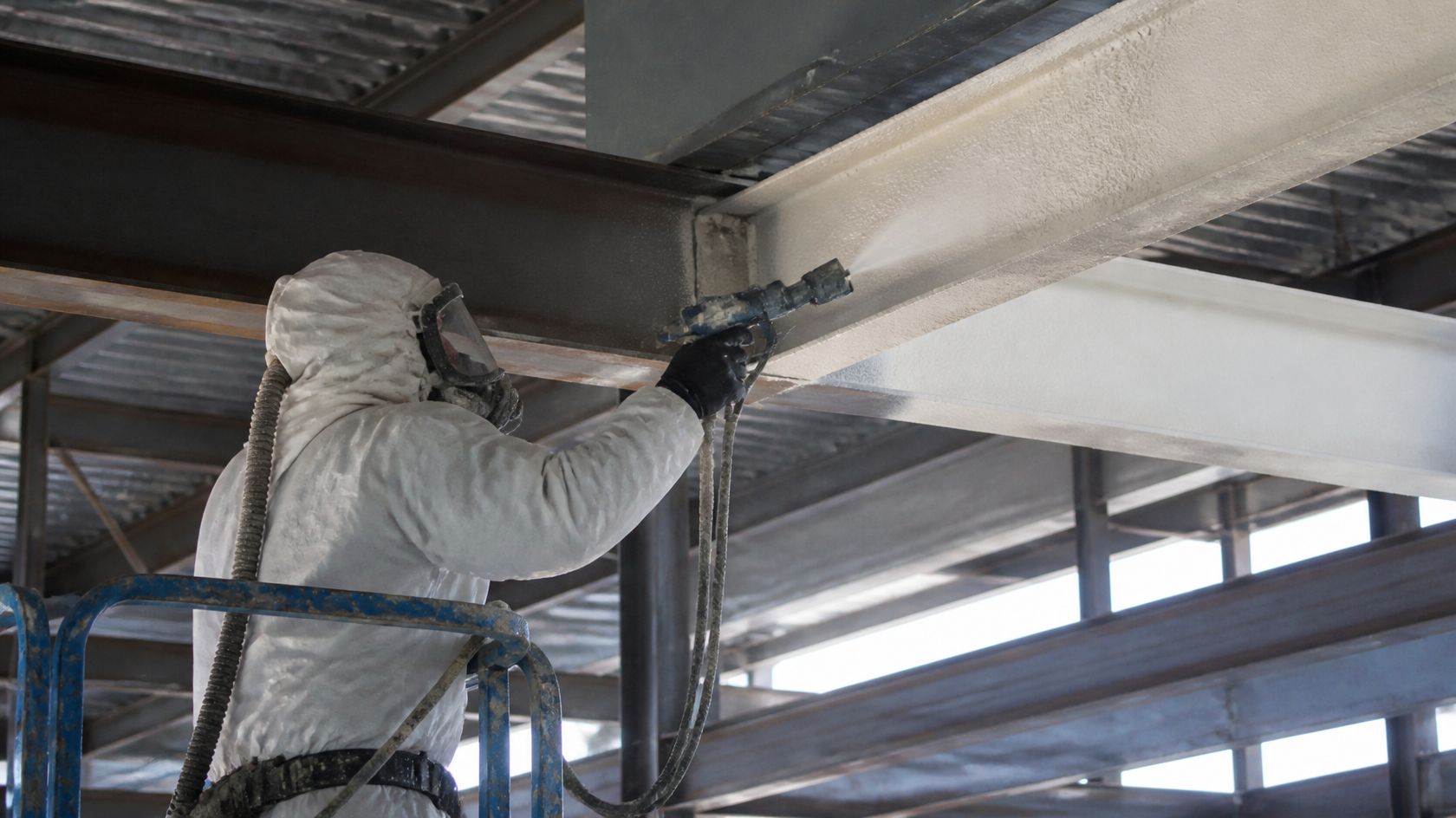
An intumescent coating looks like a normal paint finish. But when it’s exposed to the heat of a fire, it reacts and swells up, often to many times its original thickness. This forms a thick, insulating char layer that slows down the rate at which heat reaches the steel.
By keeping the steel below the temperature at which it starts to lose significant strength, the coating buys valuable time. The thickness applied is calculated for each steel section, based on its size, shape and how much fire resistance is needed.
Thin-film and thick-film coatings
- Thin-film intumescents are common in commercial buildings, offices, schools and warehouses, where a smooth, decorative finish is often wanted.
- Thick-film epoxy intumescents are used for more demanding environments, such as petrochemical, oil and gas and offshore sites, where they must resist fast-developing hydrocarbon fires, impact and harsh weather.
Understanding fire ratings
Fire protection for steel is specified as a period of fire resistance, typically 30, 60, 90 or 120 minutes. The rating needed depends on the type of building, its height, how it’s used and the fire strategy for the site.
In the UK and Europe, reactive coatings on steel are tested to BS EN 13381-8, with older products assessed to BS 476. The coating manufacturer uses this test data to calculate the dry film thickness needed on each beam and column to achieve the required rating.
Why application quality matters
An intumescent coating is only as good as its application. If it’s applied too thin, it won’t provide the fire resistance that was designed. If the surface wasn’t prepared properly, it may not stay bonded to the steel. A good PFP contractor will:
- Prepare the steel correctly, usually by abrasive blasting to the specified standard
- Apply a compatible primer before the intumescent coat
- Apply the coating to the specified dry film thickness for each section
- Measure and record film thickness as the work progresses
- Apply a suitable topcoat where needed to protect against moisture and wear
- Provide full records, so the work can be signed off and maintained
Since the Building Safety Act 2022, the spotlight on fire safety competence and record keeping has never been brighter. Clear evidence of what was applied, where and to what thickness is essential.
Maintaining intumescent coatings
Intumescent coatings need to stay in good condition to perform in a fire. Damage from impacts, building work, water or alterations should be repaired using a compatible product. It’s worth including fire protection coatings in your regular building inspections, especially after any refurbishment or new services have been installed.
How AIC can help
AIC provides specialist passive fire protection coatings for commercial and industrial buildings across the UK. Because we also carry out blasting and painting, we can handle surface preparation, priming, intumescent application and topcoats as one package, with film thickness checked and recorded throughout. Our team can also provide fire stopping around service penetrations, so your passive fire protection is joined up.
Frequently asked questions
How long does intumescent paint last?
With correct application and a suitable topcoat, intumescent coatings can last for many years. Their life depends on the environment and any damage, so regular inspection is important.
Can intumescent paint be applied on site?
Yes. It can be applied on site or off site in a controlled facility. Off-site application can speed up the build programme, while on-site work is common for refurbishments and repairs.
What fire rating do I need for my steelwork?
It depends on your building and its fire strategy. Common ratings are 30, 60, 90 or 120 minutes. Your fire engineer or building designer will set the requirement.
Can intumescent coatings be used outdoors?
Yes, but they must be suitable for external use and usually need a protective topcoat. Thick-film epoxy systems are often used in exposed industrial environments.
Talk to AIC about your site
Need fire protection for structural steel? Contact AIC for expert advice and a free, no-obligation quote for intumescent coatings and passive fire protection.
Find out more about our passive fire protection, blasting and painting and fire stopping services, or read our guide: Corrosion Under Insulation (CUI).
Contact AIC for a free, no-obligation quote or call 01642 689587.